





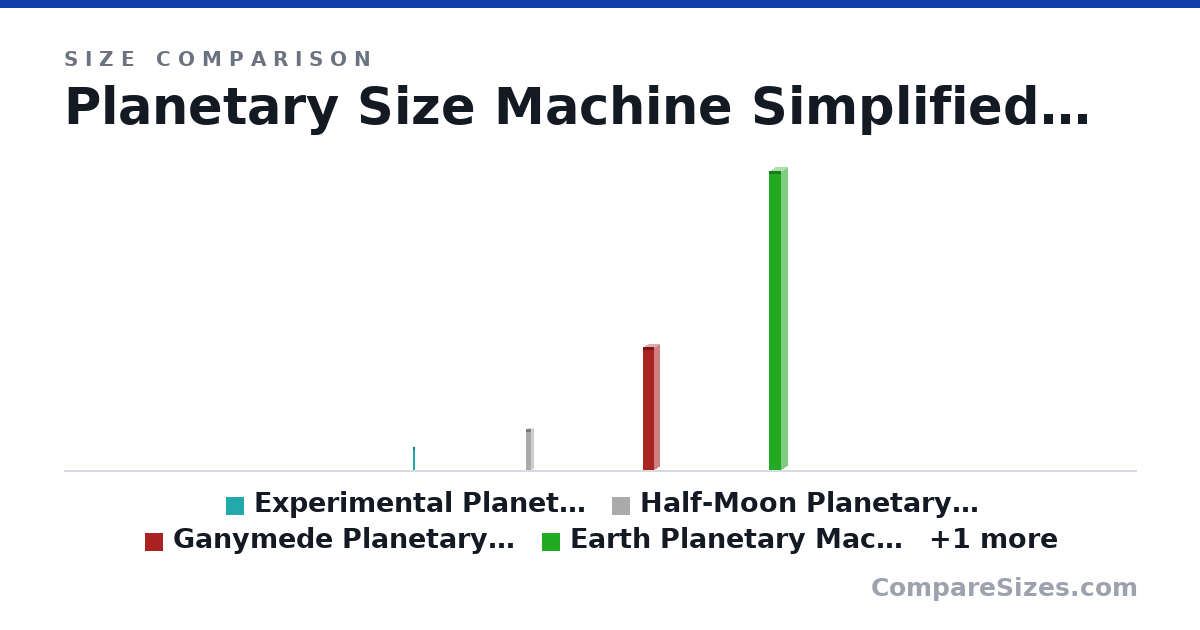
This comparison shows 5 objects drawn to scale. Drag the view to rotate it, or add your own items to the comparison.
| Object | As entered | Centimetres | Inches |
|---|---|---|---|
| Experimental Planetary Machine | 1,000,000 × 100,000 × 100,000 m | 100,000,000 × 10,000,000 × 10,000,000 cm | 39,370,079 × 3,937,008 × 3,937,008 in |
| Half-Moon Planetary Machine | 1,737 × 200 × 200 km | 173,700,000 × 20,000,000 × 20,000,000 cm | 68,385,827 × 7,874,016 × 7,874,016 in |
| Ganymede Planetary Machine | 5,268 × 430 × 450 km | 526,800,000 × 43,000,000 × 45,000,000 cm | 207,401,575 × 16,929,134 × 17,716,535 in |
| Earth Planetary Machine 1st Model | 12,742 × 486 × 502 km | 1,274,200,000 × 48,600,000 × 50,200,000 cm | 501,653,543 × 19,133,858 × 19,763,780 in |
| Earth Planetary Machine 4th Model | 12,738 × 6,374 × 6,534 km | 1,273,800,000 × 637,400,000 × 653,400,000 cm | 501,496,063 × 250,944,882 × 257,244,094 in |
| Object | Volume | vs smallest |
|---|---|---|
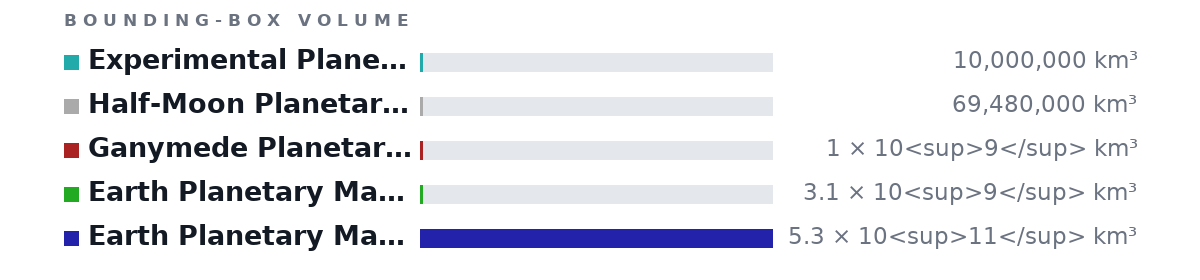
| Experimental Planetary Machine | 10,000,000 km³ | 1× |
| Half-Moon Planetary Machine | 69,480,000 km³ | 6.9× |
| Ganymede Planetary Machine | 1 × 10⁹ km³ | 102× |
| Earth Planetary Machine 1st Model | 3.1 × 10⁹ km³ | 311× |
| Earth Planetary Machine 4th Model | 5.3 × 10¹¹ km³ | 53,051× |
* Height × width × depth of the box each object fits in, not the object's own volume. Multiples are against the smallest box here, Experimental Planetary Machine.